
9 Reasons Your Washing Machine Is Making Loud Noises and Vibrating
 July 10, 2026
8 min read
July 10, 2026
8 min read
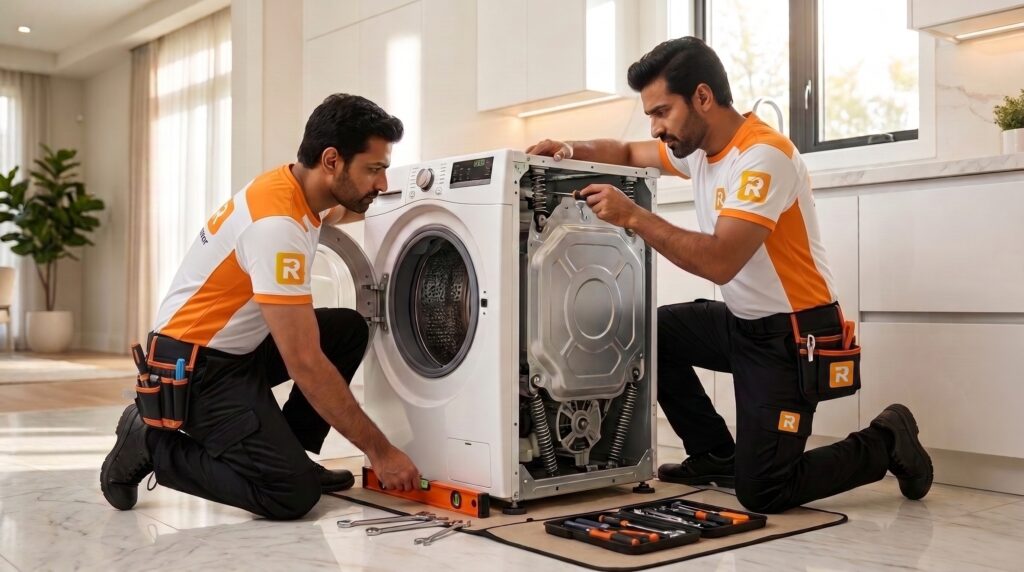
A loud washing machine is not just annoying. It can point to a load problem, poor leveling, loose transit bolts, worn drum bearings, weak shock absorbers, or trapped objects inside the drum or pump. In Dubai homes, tiled floors and tight laundry spaces can make vibration worse, especially during the spin cycle.
Start with the sound pattern, because the noise tells you which part of the washing machine deserves attention first.
Use this guide as a practical fault map before calling a technician.
Why is your washing machine making noise?
Your washing machine makes noise because the drum, tub, suspension, and cabinet stop moving as one controlled system. Unbalanced loads, shipping bolts, and an unlevel washer are common reasons for vibration, walking, thumping, or off-balance movement.
A front-load washer spins fast enough to expose weak installation. A top-load washer can shake when bulky items gather on one side. Shaking can happen when the four legs do not make secure ground contact, when a large bulky item sits inside, or when shipping bolts remain in a new front-load washer.
Use the sound first. Grinding points toward bearing wear. Banging points toward load imbalance, foreign objects, or suspension movement. Rattling points toward the drum, door seal, or drain pump. Strong floor vibration points toward leveling, tiled-floor contact, or shock absorbers.
What causes noise and vibration?
Noise and vibration come from 9 connected washer fault groups.
The table separates the noise type from the likely part. Use the sound, timing, and washer movement together.
| Symptom | Likely cause | Quick check | Service risk |
|---|---|---|---|
| Banging during spin | Unbalanced load or loose drum movement | Pause and redistribute the laundry | Low to medium |
| Grinding that rises with speed | Worn drum bearing | Turn empty drum by hand | High |
| Rattling during wash | Coins, buttons, bra wire, pump debris | Check drum and pump filter | Medium |
| Whole machine walking | Unlevel feet or weak floor contact | Press each corner | Low |
| Violent shaking after moving home | Transit bolts still installed | Inspect rear panel | High |
| Thudding with empty drum | Shock absorbers or springs | Push drum down gently | High |
| Scraping noise | Foreign object between drum and tub | Rotate drum slowly | Medium |
| Metallic knock | Counterweight or mount issue | Stop use and inspect | High |
| Squeal or belt smell | Belt, pulley, or motor strain | Stop cycle and unplug | High |
Check the drum and drain pump when rattling appears because foreign objects can enter with laundry and create noise during the program.
How does a worn drum bearing cause grinding noise?
A worn drum bearing supports the inner drum shaft, and bearing wear creates grinding as spin speed rises. You need to check this when the washer sounds rough even with an empty drum.
Turn the drum by hand after unplugging the appliance. A healthy drum rotates smoothly. A failed bearing feels rough, loose, or noisy. Rotating-machinery research treats vibration signals as a key indicator for bearing fault detection, which matches how technicians read washer-bearing noise in the field.
Skip this fault and water can reach the bearing seal, the drum spider, or the motor area. Bearing jobs in Dubai often become quote-based because labor time and part access vary by brand.
How do foreign objects in the drum cause banging?
Foreign objects cause banging when metal or hard plastic hits the drum, tub, or drain pump. You need to do this check after washing uniforms, children’s clothes, abayas with pins, or pockets with coins.
Check the drum holes with a torch. Then clean the pump filter, if your model gives front access. Coins, buttons, and small clothing items are objects that can get stuck and cause wash-cycle noise.
Skip this fault and a small object can tear a door gasket, jam the drain pump, or score the drum surface.
How does an unlevel machine cause vibration?
An unlevel machine vibrates because the drum force transfers unevenly through the cabinet and feet. You need this check in Dubai apartments with glossy tiles, uneven grout lines, laundry closets, and stacked appliances.
Place a spirit level on the washer top. Adjust the feet until the machine stays firm when you press each corner. The washer belongs on a flat, solid floor, with the feet adjusted until the appliance stays stable.
Skip this step and the washer can walk, chip tile edges, loosen hoses, or shake cabinetry.
How do worn shock absorbers cause shaking?
Worn shock absorbers cause shaking because the drum loses damping during acceleration and spin. You need to check this when the washer bangs with normal loads after leveling looks correct.
Push the empty drum downward. A controlled drum returns without bouncing. A loose drum drops, rebounds, or hits the cabinet. Transit bolts, unlevel installation, unbalanced laundry, loose hoses, and trapped objects are common reasons a washer shakes during spin.
Skip worn shocks and the washer can damage bearings, mounts, counterweights, and nearby cabinets.
How do you fix noise and vibration yourself?
Fix safe washing machine noise problems by checking the load, feet, transit bolts, drum, pump filter, and floor contact first. These checks cost little and solve many spin-cycle complaints before paid service.
Use this order:
- Unplug the washer before touching the drum, pump filter, or rear panel.
- Remove half the load, especially towels, blankets, rugs, jeans, and bath mats.
- Balance the drum with mixed item sizes instead of one heavy item.
- Adjust all leveling feet until the washer stops rocking.
- Inspect the rear for transit bolts, especially after moving house.
- Check the drum holes, rubber door seal, and pump filter for objects.
- Run a short empty spin and note the exact sound.
Front-load machines can use 3, 4, or 7 shipping bolts depending on model type, and top-load machines do not use shipping bolts. That detail matters after relocation in Dubai, because transit bolts can stay hidden behind a tight laundry cabinet.
Which of these faults needs a professional?
You need a professional repair service when the noise continues after load balance, leveling, transit-bolt removal, and filter cleaning. The 9 service signs below point to parts inside the drum, suspension, motor, or cabinet.
- Grinding gets louder as spin speed rises.
- The empty drum feels rough by hand.
- The drum drops, bounces, or hits the door seal.
- The washer walks after correct leveling.
- Water leaks near the front seal or under the cabinet.
- A metallic knock appears with every drum rotation.
- A burning smell comes with squealing or a failed spin.
- Error codes repeat after balanced loads.
- The machine became noisy right after transport or installation.
Noise also works as a measurable product attribute during comparison and diagnosis.
How much does it cost to fix noise and vibration in Dubai?
Washing machine noise repair in Dubai usually starts with inspection and labor, then changes by part, brand, and access. Dubai appliance repair labor starts at AED 129 per hour, with a possible AED 99 plus value-added tax minimum for work under 60 minutes, while inspection can be separate.
Local pricing pages show broad ranges. Some home appliance repair companies list washing machine repairs in Dubai for AED 100 to AED 700, depending on the issue and parts required. Many list prices such as a drain pump from AED 280, a door seal from AED 280, a motor from AED 450, a control board from AED 500, and a drum spider from AED 380.
| Dubai repair item | Typical public price signal | Notes |
|---|---|---|
| Inspection or callout | AED 99 to AED 150 plus value-added tax | Some firms waive it after repair |
| Leveling, load advice, filter cleaning | AED 100 to AED 250 | Low part risk |
| Drain pump or seal work | From AED 280 for part examples | Brand affects part cost |
| Motor or board work | From AED 450 to AED 500 for part examples | Confirm warranty first |
| Bearing, drum spider, suspension | Quote-based, often higher labor | Ask for written part list |
A new washing machine in Dubai can cost between AED 1,000 and AED 6,500. That gives you a practical repair ceiling.
For warranty cases, keep the invoice, model number, serial number, service report, and photos or videos of the fault. The UAE Ministry of Economy and Tourism says consumer protection programs aim to safeguard consumer rights and support sound commercial practices across the emirates.
Final check before the noise becomes a repair bill
A washing machine making a loud noise or vibrating is easier to handle when you read the symptoms early. Grinding usually points toward the drum bearing. Banging often links to load balance, trapped objects, or loose suspension. Strong shaking can start with unlevel feet, tiled floors, or transit bolts left after moving. The safest first step is simple: unplug the washer, rebalance the load, check the feet, inspect the drum seal, and clean the pump filter if your model allows it. If the washer still walks, grinds, leaks, smells burnt, or knocks with every rotation, stop using it and book service. A clear video, model number, invoice, and fault notes can help you get a faster quote in Dubai.
FAQs
A loud washing machine is safe only when the noise stops after load balancing, leveling, and filter cleaning.
Glossy tiles reduce grip, so weak leveling feet or fast spin vibration can make the washer move more easily.
Bearing noise sounds rough, grinding, or gritty, especially when the empty drum feels uneven by hand.
Repair makes sense when the fault is limited, the washer is not too old, and the quote stays below replacement value.
Ahmed Al Mansoori
Ahmed Al Mansoori is a UAE-based home appliance repair specialist with over 12 years of hands-on experience in diagnosing and repairing washing machines, refrigerators, dishwashers, ovens, dryers, and other household appliances across Dubai and Abu Dhabi. He has worked with leading appliance brands and is known for delivering reliable repair solutions, preventive maintenance guidance, and same-day technical support for residential clients. Ahmed specializes in troubleshooting modern smart appliances and energy-efficient systems commonly used in UAE homes.
