
Washing machine leaking water: Why it happens and how to fix it
 July 10, 2026
10 min read
July 10, 2026
10 min read
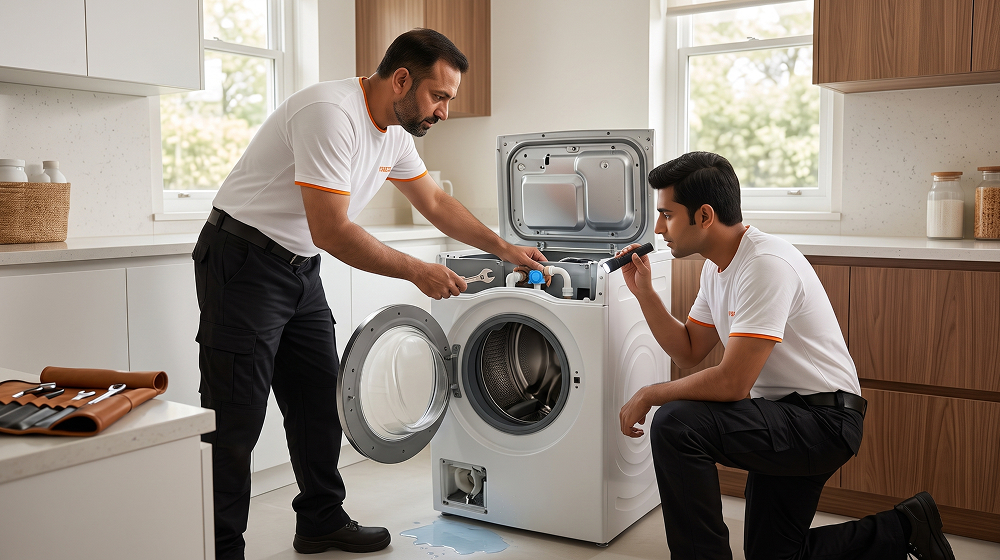
A washing machine leaking water usually means one water-control part has failed, moved, clogged, cracked, or lost its seal. The main leak points are the door gasket, inlet hoses, water inlet valve, detergent drawer, drain hose, drain pump, and tub seal.
This guide explains why your washing machine leaks, how to trace the leak source, which parts you can check yourself, when to call a technician, and what leak repair may cost in Dubai.
Why is your washing machine leaking water?
Your washing machine is leaking water because the washer’s water path has lost control at one point. The water path starts at the hot and cold inlet hoses, passes through the inlet valve, enters the dispenser and drum, then leaves through the drain pump and drain hose.
A front-load washing machine usually leaks at the door gasket, detergent drawer, pump filter, or drain pump area. A top-load washing machine usually leaks at the rear inlet hoses, overflow path, tub hose, or drain hose. The leak location gives the fastest clue.
The timing gives the second clue:
- Water during filling points to inlet hoses, inlet screens, inlet valves, or detergent drawers.
- Water during washing points to the door seal, tub hose, excessive suds, or cracked dispenser path.
- Water during draining points to the drain hose, standpipe, pump filter, or drain pump.
- Water while the washer is off points to a water inlet valve fault.
A burst supply line creates the highest damage risk. A Connecticut Insurance Department pamphlet using Insurance Institute for Business and Home Safety data says a burst washing machine water supply line caused half of all water damage incidents involving washing machines, with more than $6,000 in average damage per incident.
What causes a water leak?
A washing machine water leak has common source zones like the seal, hose, valve, drawer, and tub. Check the visible puddle first, then inspect the matching part.
This leak-source map helps you match the water location with the likely fault.
| Leak location | Likely fault | First check | Typical action |
| Front door | Worn gasket or trapped thread | Rubber lip and inner fold | Clean or replace the gasket |
| Rear wall side | Loose or cracked inlet hose | Hose washer, thread, bulge | Tighten or replace the hose |
| Upper front drawer | Blocked detergent drawer | Drawer channel and detergent dose | Clean drawer and reduce suds |
| Bottom during drain | Drain hose or drain pump | Pump filter, hose, standpipe | Clear blockage or replace the pump |
| Bottom during wash | Tub seal or internal hose | Water under center of washer | Call the technician |
How does a worn door seal or gasket cause leaks?
A worn door seal causes leaks because the rubber gasket no longer seals the front-load washer door against the drum opening. Even a single strand of hair or piece of thread in the rubber gasket can cause leakage.
You need to check this when water appears at the front of the washer during wash or rinse. Fold the gasket back, then inspect for coins, hairpins, fabric, lint, black buildup, cracks, and hardened rubber.
Clean the gasket with a damp cloth and remove trapped debris. Replace the gasket if the rubber has a cut, tear, missing lip, or warped section. Skip this fault, and the leak repeats at the same door position.
How do cracked or loose hoses leak water?
Cracked or loose hoses leak water because the hose wall, rubber washer, or threaded connector cannot hold water pressure. Rear washer leaks often relate to installation, leaking hoses, or plumbing issues.
This check belongs at the back of the machine. Turn off both supply valves. Inspect the hot hose, cold hose, drain hose, washers, threads, wall valves, and kinks. Replace any hose with cracks, blisters, rusted ends, or flattened rubber washers.
A washing machine hose can hold about 70 pounds of pressure and can release about 650 gallons per hour after failure. State Farm reported nearly $30 million in 2020 homeowner claim payments linked to washing machine hose failure.
It is advised to leave a 3- to 4-inch gap behind the washing machine to prevent hose kinking near the valve connection. The same pamphlet says manufacturers recommend replacing washing machine hoses every 5 years.
How does a faulty inlet valve cause leaking?
A faulty inlet valve leaks because the valve fails to close after the washer stops filling. A washer that drips or fills while turned off may have a failed water valve, and the valve assembly usually requires replacement.
You need to check this when the drum gains water overnight or between cycles. Turn off the wall valves after use. If the tub stops filling, the fault likely sits at the valve or supply side.
Do not open the inlet valve assembly without electrical knowledge. That part connects water supply, wiring, and control signals. Skip this fault and the washer can overfill while nobody watches the machine.
How does a blocked detergent drawer overflow?
A blocked detergent drawer overflows because detergent residue, debris, excess suds, or high water pressure blocks the drawer’s flow path. High water pressure, foreign material, non-HE detergent, clogged hoses, and a blocked drawer tub are causes of detergent drawer leakage.
You need to check this when water leaks from the upper front area. Remove the drawer, rinse each compartment, and clean the drawer recess with a small brush. Use high-efficiency detergent if the washer requires it.
A drawer leak often looks worse than it is. Still, repeated overflow can run down the front panel and collect under the washer. That makes the leak look like a pump fault.
How do you fix a water leak yourself?
You can fix an external washing machine water leak yourself when the fault sits in the gasket, drawer, inlet hose, drain hose, or detergent dose. Stop if the repair needs cabinet removal, wiring work, bearing access, or pump replacement.
A clear safety order for front-load washer leaks suggests pausing the cycle or turning power off at the control panel or circuit breaker. Do not unplug while standing in water; then turn off the household water valves behind the washer.
Use this 10-minute leak check:
- Stop the cycle from a dry position.
- Turn off hot and cold water valves.
- Dry the floor.
- Mark the first puddle location with tissue.
- Check the door gasket for debris or cuts.
- Check rear hoses for bulges, cracks, and wet threads.
- Remove and rinse the detergent drawer.
- Check the drain hose for kinks or poor standpipe fit.
- Run a short rinse test.
- Stop the test as soon as water appears.
Users should inspect fill hoses and drain hoses for holes, damage, or improper installation. That single step covers 3 external leak points before any part removal.
Which of these faults needs a professional?
A professional washing machine repair is the safer choice for drain pump leaks, tub seal leaks, inlet valve failure, control faults, repeated bottom leaks, and water near wiring. These faults sit inside the washer cabinet or combine water with electrical parts.
Call a technician when you notice these signs:
- Water appears under the middle of the machine during spin.
- Water comes from the pump filter after cleaning.
- The washer fills while switched off.
- The door gasket has a visible tear.
- The drain pump hums but does not drain.
- The washer trips the power.
- The same leak returns after hose and drawer checks.
Some front-load pump filter access depends on the model. Models without front access require service. Blocked pumps and broken door seals are fixable, but names failed drum bearings, fried electronic modules, and broken gearboxes as major washing machine faults. It also gives washing machines a 10-year life expectancy for both top-load and front-load models.
How much does it cost to fix a water leak in Dubai?
Washing machine leak repair in Dubai often starts at AED 79 for a simple leak repair or inspection, while part-based repairs can exceed AED 270. Public Dubai service pages list inspection at AED 49 and leak repair at AED 79, and another Dubai provider lists repair pricing at AED 149 after inspection.
Part prices change the final quote. A UAE repair page lists a service visit charge of AED 150, a drain pump from AED 280, a door seal from AED 280, and a water inlet valve from AED 270. It also states the final repair cost depends on model and fault severity.
Use this Dubai repair-cost table for planning.
| Leak fault | Dubai price signal | Repair decision |
| Inspection | AED 49 to AED 150 | Useful for unknown leak source |
| Minor leak repair | From AED 79 | Fits hose, drawer, or simple access faults |
| Door seal | From AED 280 | Worth checking on washers under 7 years old |
| Water inlet valve | From AED 270 | Professional repair due to water and wiring |
| Drain pump | From AED 280 | Professional repair if leaking or humming |
| Drum or tub fault | From AED 199 for drum-related service signals | Quote first, especially on older machines |
For tenants in Dubai, check the tenancy contract before approving a non-emergency appliance repair. For landlords and property managers, keep records of a photo of the leak, the model label, the technician’s diagnosis, and the invoice. Those records help with maintenance approval and dispute readiness.
Common washing machine problems
Common washing machine problems include poor drainage, excessive suds, overfilling, vibration, bad smells, and failure to spin. These problems share the same water-path parts as leaks: hoses, pump, drawer, seal, valve, and drain line.
Poor drainage connects to a clogged pump filter, kinked drain hose, or blocked standpipe. A kinked or crimped drain hose can affect draining, and a clogged pump filter can prevent proper drainage.
Excessive suds connect to detergent type and dose.
Vibration connects to leveling and hose movement. Improper leveling and a loose or incorrectly installed drain hose are among washing machine leak causes.
A washing machine leaking water rarely starts as a mystery. Door water points to the gasket. Rear water points to hoses. Drawer water points to detergent flow. Bottom water points to the pump, tub seal, drain hose, or internal hose. Start with the puddle. Then fix the part that actually carries water.
Final check before the leak becomes a repair bill
A washing machine leaking water gives you clues before the damage spreads. Door leaks point to the gasket. Rear leaks point to inlet hoses. Drawer leaks point to detergent buildup or excess suds. Bottom leaks point to the drain pump, drain hose, tub seal, or an internal connection.
Start with the puddle, not the guess. Turn off the water supply, cut power from a dry position, and check the visible leak points first. Many small leaks come from loose hoses, dirty drawers, trapped fabric, or worn rubber seals. But repeated leaks, water under the machine, electrical trips, or a washer that fills while switched off need a technician. In Dubai, that early decision can save flooring, cabinetry, tenant disputes, and a higher repair quote.
FAQs
Why does my washing machine leak only during the spin cycle?
A spin-cycle leak usually points to a loose drain hose, weak drain pump seal, tub seal fault, or water escaping during heavy vibration.
Can too much detergent make a washing machine leak water?
Yes, excess detergent can create foam overflow, especially in front-load washers that require high-efficiency detergent.
Is a washing machine hose leak urgent?
Yes, a hose leak is urgent because supply hoses hold pressure and can release water quickly if the hose splits or disconnects.
Can I keep using my washing machine if it has a small leak?
No, stop using it until you find the leak source because a small leak can reach wiring, flooring, cabinets, or downstairs ceilings.
Ahmed Al Mansoori
Ahmed Al Mansoori is a UAE-based home appliance repair specialist with over 12 years of hands-on experience in diagnosing and repairing washing machines, refrigerators, dishwashers, ovens, dryers, and other household appliances across Dubai and Abu Dhabi. He has worked with leading appliance brands and is known for delivering reliable repair solutions, preventive maintenance guidance, and same-day technical support for residential clients. Ahmed specializes in troubleshooting modern smart appliances and energy-efficient systems commonly used in UAE homes.
