
Oven Repair Guide: Fix Heating Issues Quickly Without Guesswork
 May 15, 2026
15 min read
May 15, 2026
15 min read
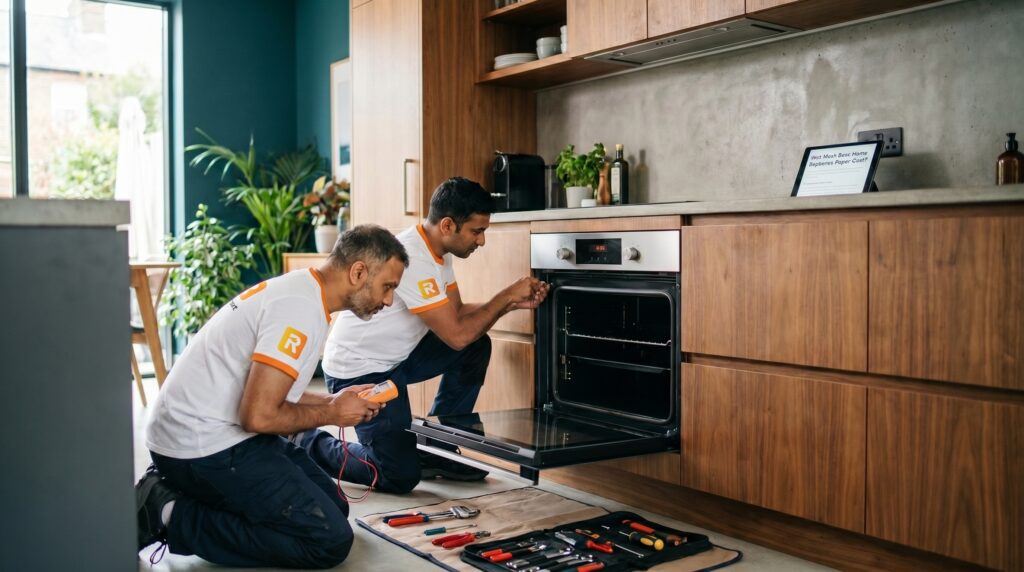
An oven that does not heat properly creates 3 common problems: undercooked food, wasted electricity or gas, and higher safety risk. In Dubai and across the UAE, oven heating issues matter because kitchens run inside high-use apartments, villas, staff housing, holiday homes, and commercial-style home kitchens.
Dubai’s population reached 3,863,600 by the end of 2024, which means more occupied homes, more kitchen appliance use, and more demand for reliable oven repair in Dubai. DEWA also reported that Dubai’s energy demand rose 5.4% in 2024, reaching 59,594 GWh, so inefficient appliances add avoidable pressure to household bills and the wider grid.
This oven repair guide explains why an oven is not heating, how to check the safest causes first, when a heating element or gas igniter fails, and when professional oven repair is the safer choice.
What Is the Fastest Way to Diagnose an Oven Heating Issue?
The fastest way to diagnose an oven heating issue is to check power, settings, door seal, heating source, temperature sensor, and error codes in that order.
This order works because it moves from low-risk checks to high-risk components. A tripped breaker, wrong oven mode, loose plug, or poor door seal can copy the symptoms of a failed heating element. Whirlpool also lists the circuit breaker, outlet, heating element, door seal, temperature sensor, and igniter as key oven heating checks.
Quick Diagnosis Table
| Symptom | Likely Cause | Fast Check | Risk Level |
| Oven display is off | Power supply issue | Check breaker and plug | Medium |
| Oven turns on but stays cold | Failed element or igniter | Check glow or ignition | High |
| Oven heats slowly | Weak element, poor seal, wrong mode | Inspect seal and preheat time | Medium |
| Oven overheats | Sensor or thermostat issue | Use oven thermometer | High |
| Food burns on one side | Fan, sensor, rack position, element | Test convection and rack position | Medium |
| Gas smell continues | Gas supply or ignition fault | Turn off gas and ventilate | Critical |
Why Is My Electric Oven Not Heating in Dubai?
An electric oven usually stops heating because of a tripped breaker, faulty heating element, damaged thermostat, failed temperature sensor, or control board fault.
Electric ovens in UAE homes operate on local mains power. The International Electrotechnical Commission lists the UAE supply as 230V and 50Hz, with plug types including G and M. A built-in oven often uses a dedicated circuit, so weak wiring, a loose terminal, or a tripped breaker can stop heat even when the clock or display still works.
Common Electric Oven Heating Faults
- Broken bake element
The bake element creates bottom heat. A working element often glows red or orange during heating. Whirlpool states that a broken heating element is a possible cause when an electric oven is not heating. - Faulty broil element
The broil element creates top heat. If the broil element works but the bake element does not, the fault is usually limited to the bake circuit. - Tripped circuit breaker
A breaker stuck between On and Off can cut power. Whirlpool recommends checking the breaker first when an oven is not heating. - Loose or burned outlet connection
Black marks, melted plastic, or heat marks near an outlet indicate electrical risk. A licensed electrician is the correct option for outlet damage. - Defective temperature sensor
A sensor tells the control board when to increase or reduce heat. If the sensor is bent, loose, or touching the oven wall, the oven can misread temperature. - Control board failure
A control board fault can stop voltage from reaching the heating element. This issue usually appears with error codes, random shutdowns, or dead heating cycles.
Why Is My Gas Oven Not Heating Properly?
A gas oven usually stops heating because of a dirty igniter, weak igniter, closed gas valve, thermostat fault, sensor issue, or electrical connection fault.
Gas ovens still use electricity for ignition, controls, safety valves, lights, and timers. Whirlpool states that gas ovens can fail to heat because of electrical connection issues, gas connection problems, dirty igniters, thermostat faults, or temperature sensor problems.
Gas Oven Warning Signs
- The oven clicks but does not ignite.
- The igniter glows weakly but the burner stays off.
- The stovetop works but the oven does not heat.
- The oven lights, then shuts off quickly.
- Food remains cold after 15 to 20 minutes.
- A gas smell continues after the oven is turned off.
A short gas smell during ignition can happen in some gas ovens. A strong or continuing gas smell is different. Turn the oven off, open windows, avoid electrical switches, and contact a licensed gas technician or emergency service.
Why Does the Oven Heat Slowly?
An oven heats slowly when heat escapes, the heating element is weak, the igniter is delayed, the sensor reads incorrectly, or the oven is overloaded.
Slow heating is not always a major repair. A poor door gasket can leak heat. Oversized trays can block airflow. Aluminum foil on the oven floor can interrupt heat distribution. A dirty cavity can also smoke, smell, and slow heating because grease absorbs and releases heat unevenly.
DEWA advises that a microwave consumes less energy than an oven, which means long oven preheating and repeated reheating can increase household electricity use. This matters in Dubai homes where cooling, kitchen appliances, water heaters, and refrigerators already add to total consumption.
Slow Heating Checklist
- Check the oven mode.
- Remove oversized trays.
- Keep racks in the center position.
- Inspect the door gasket.
- Clean heavy grease deposits.
- Preheat with an oven thermometer.
- Compare set temperature with actual temperature.
- Record the time needed to reach 180°C.
How Do I Know If the Heating Element Is Bad?
A heating element is likely bad if it does not glow, shows blistering, has visible cracks, or creates uneven heat.
The heating element is one of the most direct causes of electric oven heating failure. Whirlpool identifies a broken heating element as a possible reason an electric oven is not heating.
Visible Signs of a Bad Heating Element
| Sign | Meaning |
| No red or orange glow | Element may not receive power or may be open-circuit |
| Blistered surface | Element coating has overheated |
| Cracked coil | Element is physically damaged |
| Sparks or popping | Electrical failure risk |
| One hot section only | Partial element failure |
| Breaker trips during heating | Short circuit risk |
Do not touch or remove the element while the oven is connected to power. Heating elements carry high current and remain hot after the oven is switched off.
How Do I Know If the Gas Igniter Is Bad?
A gas igniter is likely bad if it glows weakly, clicks without ignition, delays lighting, or lets gas flow without stable flame.
The igniter opens the gas safety valve and lights the burner. Whirlpool notes that dirty or faulty igniters can stop a gas oven from heating. A weak igniter can glow but still fail to draw enough current for safe ignition.
Common Igniter Symptoms
- No glow means the igniter may be broken or not powered.
- Weak glow means the igniter may not open the gas valve fully.
- Delayed flame means gas may build before ignition.
- Repeated clicking means ignition is not complete.
- Gas smell means the appliance requires urgent safety attention.
Gas oven igniter repair is not a casual DIY task. It connects fuel, ignition, electricity, and flame safety in one system.
Can a Door Seal Cause Oven Heating Problems?
Yes, a damaged oven door seal can cause slow heating, uneven baking, heat loss, and longer cooking times. The door gasket holds heat inside the oven cavity. Whirlpool states that the oven door seal must stay in place and the door must fully close to prevent heat from escaping. In Dubai apartments, a leaking oven can also increase kitchen heat, which adds discomfort during hot months.
Door Seal Test
- Place a sheet of paper between the oven door and gasket.
- Close the door.
- Pull the paper gently.
- Repeat this test at 4 points.
- Loose paper movement indicates weak sealing pressure.
Replace a gasket when it is torn, hard, flattened, greasy, or hanging loose.
Can a Temperature Sensor Stop an Oven from Heating?
Yes, a faulty or displaced temperature sensor can stop an oven from reaching the correct temperature.
The sensor measures oven temperature and sends readings to the control board. Whirlpool states that the temperature sensor is normally positioned at a 90° angle and incorrect positioning can cause wrong temperature readings.
For gas ovens, Whirlpool recommends checking the sensor position when the oven turns on but does not heat correctly.
Sensor Fault Signs
- Food burns at normal settings.
- Cakes sink in the center.
- Meat stays undercooked.
- Oven overheats and shuts down.
- Temperature jumps up and down.
- Error codes appear on the display.
A basic thermometer test helps confirm a temperature issue. Whirlpool suggests checking the oven with an oven thermometer on the center rack and adjusting calibration when the reading is off by 15°F or more. A difference of 100°F or more requires professional service.
What Oven Repair Checks Are Safe for Homeowners?
Safe homeowner checks include settings, breaker position, plug condition, door seal, rack position, oven cleanliness, and thermometer testing.
Do not open electrical panels, cut wires, bypass fuses, repair gas valves, or test live terminals. These tasks create shock, fire, and gas-leak risk.
Safe Checks Before Calling a Technician
- Check the oven mode
Bake, grill, convection, fan bake, and defrost modes produce different heat patterns. - Check the timer
Some ovens stay inactive when a timer or delayed-start setting is active. - Check the breaker
Reset only once. A breaker that trips again indicates a fault. - Check the door seal
Heat loss can mimic weak heating. - Check rack position
Middle rack placement gives the most balanced test result. - Check actual temperature
Use a separate oven thermometer. - Check for blocked vents
Blocked vents trap heat near sensors and disturb airflow.
When Is Professional Oven Repair Required?
Professional oven repair is required when the fault involves gas, live electricity, internal wiring, control boards, thermal fuses, repeated breaker trips, or burning smells.
A licensed technician has the tools to check voltage, continuity, insulation resistance, gas ignition, flame safety, sensor readings, and part compatibility. This matters because modern ovens combine heating, sensors, control boards, cooling fans, door locks, and error-code systems.
Call a Technician Immediately If You Notice
- Burning plastic smell.
- Sparks from the oven.
- Repeated breaker trips.
- Strong gas smell.
- Melted plug or socket.
- Oven overheating.
- Error codes after reset.
- Door lock failure after self-cleaning.
- No heat after power and settings checks.
h
Oven repair matters because cooking equipment, heat, grease, gas, and electricity create a high-risk area inside the home.
UAE fire data shows why kitchen safety cannot be treated casually. Ministry of Interior figures reported by The National show that UAE civil defence teams responded to 2,473 fires in 2023, down from 3,000 in 2022, while residential fires rose to 1,636 from 1,385. Dubai Civil Defence open data also reported a 2024 fire incident rate of 7.66 per 100,000 population and an average response time of 5 minutes 30 seconds.
Cooking risk is also supported by international fire data. NFPA reported that cooking caused 44% of reported home fires, 42% of home fire injuries, and 18% of home fire deaths in its home cooking fire analysis. USFA data also identifies cooking as the leading cause of residential building fires from 2014 to 2023.
Fire-Safe Oven Use
- Keep towels away from oven vents.
- Remove plastic trays before preheating.
- Clean grease from the oven floor.
- Do not store pans or packaging inside the oven.
- Stay near the kitchen during active cooking.
- Keep a suitable fire extinguisher accessible.
- Install and maintain smoke detection devices.
The UAE government states that owners of residential houses are mandated to install fire detecting devices and subscribe to the civil defence eSystem.
What Are Common Oven Repair Costs in Dubai?
Common oven repair costs in Dubai depend on diagnosis, part type, brand, built-in design, gas or electric setup, and urgency.
Dubai oven repair prices are not fixed by one official public tariff. Published local service pages show inspection fees commonly starting around AED 50 to AED 150, while some providers advertise callout or repair charges near AED 99. More complex work, such as heating element replacement or electrical fault repair, is often advertised from AED 300 to AED 600 by local service providers.
Dubai Oven Repair Cost Table
Repair Type |
Typical Published Range |
Cost Driver |
Inspection or diagnosis |
AED 50 to AED 150 |
Visit fee and location |
Basic service or reset |
AED 99 to AED 200 |
No major part replacement |
Heating element replacement |
AED 300 to AED 500 |
Brand and element type |
Thermostat repair |
AED 150 to AED 300 |
Mechanical or electronic thermostat |
Electrical fault repair |
AED 300 to AED 600 |
Wiring, access, and safety testing |
Control board issue |
Higher variable cost |
Brand, board availability, programming |
Use these figures as market guidance, not fixed pricing. Built-in European ovens, smart ovens, double ovens, and imported models often cost more because parts and access take longer.
Should You Repair or Replace an Oven?
Repair is usually better when the oven body is sound, the part is available, and the repair cost stays below the practical value of the appliance.
Replacement makes more sense when the oven has repeated failures, rust, unavailable parts, damaged insulation, unsafe wiring, or a failing control board in an old model.
Repair vs Replace Decision Table
| Situation | Better Choice |
| One failed heating element | Repair |
| Loose gasket only | Repair |
| Dirty igniter | Service or repair |
| Repeated breaker trips | Professional diagnosis first |
| Burned wiring inside cavity | Replace may be safer |
| Control board unavailable | Replace |
| Old oven with multiple faults | Replace |
| Gas smell after ignition attempts | Urgent professional repair |
How Can Dubai Residents Reduce Oven Energy Waste?
Dubai residents can reduce oven energy waste by using the correct cooking method, keeping the seal tight, avoiding long preheating, and using DEWA Smart Living tools.
DEWA’s Smart Living initiative lets customers monitor electricity and water consumption, compare usage with similar homes, self-assess consumption patterns, and activate Away Mode for unusual consumption alerts. DEWA also compares a home’s consumption with 100 similar homes and with the 20 most energy-efficient similar homes in the neighbourhood.
A Dubai-based smart-meter study used 15-minute residential electricity data and found that household consumption patterns vary by cooling category, occupancy, dwelling size, building typology, season, weekdays, and weekends. The study also reported that residential buildings represent about 30.4% of total energy consumption in Dubai.
Practical Energy Tips for Oven Users
- Use microwave reheating for small portions.
- Keep the oven door closed during cooking.
- Match tray size to food volume.
- Cook multiple dishes in one session.
- Clean thick grease deposits.
- Replace damaged door gaskets.
- Stop using a slow-heating oven without diagnosis.
- Keep refrigerators away from the oven where possible, as DEWA advises keeping fridges away from ovens, dishwashers, dryers, and direct sunlight.
What Are the Most Common Oven Heating Problems in UAE Kitchens?
The most common oven heating problems in UAE kitchens are no heat, weak heat, uneven heat, overheating, ignition failure, and temperature mismatch.
1. Oven Not Heating at All
No heat usually points to power failure, broken element, failed igniter, thermal fuse, thermostat fault, or control board failure.
2. Oven Takes Too Long to Heat
Slow heat usually points to a weak element, bad gasket, blocked vent, dirty burner, faulty sensor, or overloaded oven cavity.
3. Oven Heats Unevenly
Uneven heat usually points to a failed fan, weak convection motor, faulty element, poor rack position, or damaged sensor.
4. Oven Gets Too Hot
Overheating usually points to a sensor fault, thermostat fault, stuck relay, or control board issue.
5. Oven Turns Off During Cooking
Sudden shutdown usually points to overheating protection, blocked ventilation, electrical fault, or internal safety component failure.
6. Gas Oven Clicks but Does Not Light
Clicking without flame usually points to dirty igniter, weak igniter, gas valve issue, or ignition wiring fault.
What Is the Best Maintenance Plan for an Oven in Dubai?
The best oven maintenance plan is monthly cleaning, quarterly seal checks, twice-yearly temperature checks, and immediate repair for gas smell, sparks, overheating, or repeated breaker trips.
Monthly Oven Care
- Wipe spills after cooling.
- Remove burnt food pieces.
- Clean racks separately.
- Check the oven light cover.
- Inspect the door seal.
Every 3 Months
- Test door seal pressure.
- Check the heating speed.
- Clean vents.
- Inspect plug area.
- Check for unusual smells.
Every 6 Months
- Use an oven thermometer.
- Compare set temperature with actual heat.
- Check fan operation.
- Inspect visible element condition.
- Review DEWA consumption changes after heavy oven use.
Once a Year
- Book inspection for older gas ovens.
- Check built-in oven ventilation.
- Inspect electrical connections where accessible by a professional.
- Replace worn gasket if heat escapes.
Quick Oven Heating Quiz for Readers
Use this quick check before booking oven repair in Dubai.
| Question | Yes | No |
| Does the oven display turn on? | Check settings next | Check power |
| Does the breaker trip again after reset? | Call technician | Continue checks |
| Does the element glow? | Check sensor or seal | Element may be faulty |
| Does the gas oven ignite within a normal time? | Check temperature | Igniter may be weak |
| Is the door seal tight on all sides? | Continue diagnosis | Replace gasket |
| Is actual temperature off by 15°F or more? | Calibrate if supported | Check another cause |
| Is actual temperature off by 100°F or more? | Call technician | Continue checks |
| Is there a strong gas smell? | Stop using oven | Continue safe checks |
Final Takeaway
A heating issue becomes easier to solve when the diagnosis follows a safe order. Start with power, settings, door seal, rack position, and temperature testing. Then move to the heating element, gas igniter, thermostat, sensor, fan, thermal fuse, and control board.
For Dubai and UAE homes, oven repair is not only about convenience. It also affects energy use, cooking safety, indoor heat, food quality, and fire prevention. The right fix saves time because it removes guesswork. It also protects the kitchen from repeated overheating, failed ignition, wasted electricity, and unsafe DIY repairs.
Ahmed Al Mansoori
Ahmed Al Mansoori is a UAE-based home appliance repair specialist with over 12 years of hands-on experience in diagnosing and repairing washing machines, refrigerators, dishwashers, ovens, dryers, and other household appliances across Dubai and Abu Dhabi. He has worked with leading appliance brands and is known for delivering reliable repair solutions, preventive maintenance guidance, and same-day technical support for residential clients. Ahmed specializes in troubleshooting modern smart appliances and energy-efficient systems commonly used in UAE homes.
