
Common washing machine problems: Causes, fixes, and warning signs to check first
 July 10, 2026
12 min read
July 10, 2026
12 min read
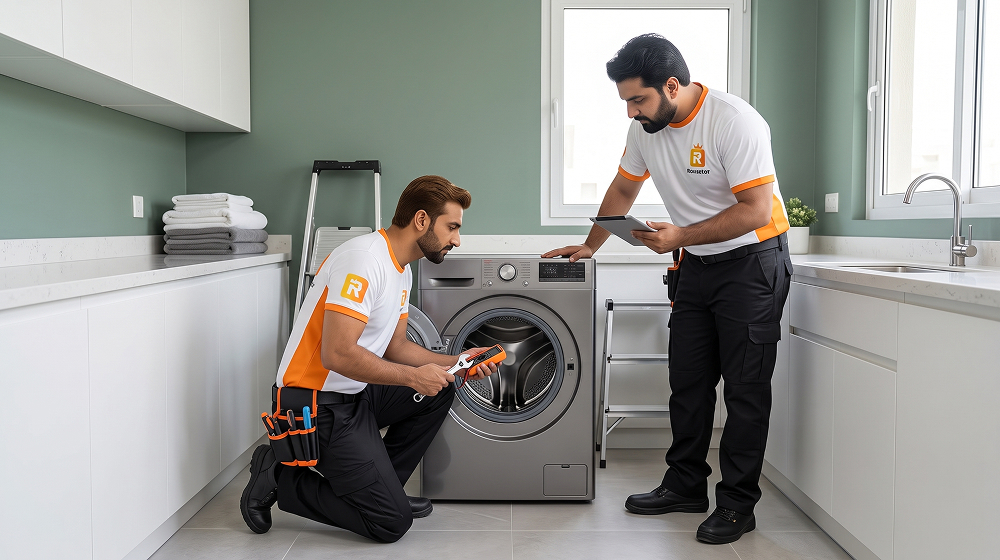
Washing machine problems usually show up as 1 of 8 faults: no spin, no drain, a leak, loud vibration, no power, no heat, a locked door, or an error code. Start with the symptom, then check the visible parts before you touch internal components.
The average American family washes about 300 laundry loads each year. Certified clothes washers use about 20% less energy and 30% less water than regular washers, and full-sized ENERGY STAR washers use about 14 gallons per load compared with 20 gallons for a standard machine. That usage volume makes small washer faults expensive when they repeat every week.
You get 2 practical benefits here:
- Faster washing machine troubleshooting
- A clearer DIY-versus-technician decision
The goal is not to replace the appliance manual. The goal is to diagnose the washing machine fault set in plain order.
What are the most common washing machine problems?
The most common washing machine problems are spin failure, drain failure, leaks, loud vibration, no power, cold washes, locked doors, and error codes. Start diagnosis with the symptom, then check visible items before internal electrical or mechanical parts.
This table gives a quick fault map. It separates what you can check first from what usually belongs to an appliance technician.
| Washing machine symptom | Likely cause to check first | First safe check | Professional boundary |
|---|---|---|---|
| Washing machine not spinning | Unbalanced load or excess suds | Redistribute clothes and run a spin cycle | Motor, belt, clutch, or control fault |
| Washing machine not draining water | Kinked hose or blocked drain path | Inspect hose and filter area | Failed pump or wiring fault |
| Washing machine leaking water | Loose hose, worn seal, or overflow | Check hose ends and door gasket | Internal tub, valve, or pump leak |
| Loud noise or vibration | Load imbalance or unlevel feet | Run empty rinse and spin test | Bearings, shocks, suspension rods |
| The washer will not turn on | Power supply or door lock fault | Check outlet and breaker | Control board or line filter |
| Washer not heating water | Supply issue, heater, or thermostat | Confirm selected cycle uses heat | Heater, sensor, relay, wiring |
| Door locked or not opening | Water inside or lock delay | Wait, drain, then retry | Door lock or control fault |
| Error code on display | Sensor-detected fault | Read code in the manual | Repeated code after reset |
The main causes behind washing machine problems are the drum, drain pump, drain hose, inlet valve, drive motor, belt, door lock, pressure switch, heater, thermostat, control board, suspension rods, shock absorbers, and tub bearings.
Why is your washing machine not spinning?
Your washing machine is not spinning because the washer detects load imbalance, excess suds, standing water, a door lock fault, or a drive system fault. Check load balance, detergent dose, and drainage before motor parts.
Check these causes first
- Redistribute the load. Towels, bathmats, jeans, and blankets gather weight on 1 side of the drum.
- Reduce detergent. Excess foam blocks normal spin behavior.
- Check drainage. A washer often avoids high-speed spin when water remains in the tub.
- Inspect the door or lid lock. The washer stops spinning when the lock signal fails.
- Escalate drive faults. Belt, clutch, motor coupling, motor, and control faults sit inside the washer.
Non-high-efficiency detergent or too much detergent creates excessive suds. Excess suds can reduce spin speed, leave very wet loads, and increase cycle time because the washer adds rinses to remove foam.
Quick spin test
Remove half the laundry, spread the remaining items evenly, and run Drain & Spin. A smooth spin points to overload or imbalance. A hum without drum movement points to a belt, motor, control, or lock issue.
Why is your washing machine not draining water?
Your washing machine is not draining water because water cannot move through the drain hose, pump filter, drain pump, standpipe, or utility sink. Start with the hose because kinks and blockages cost nothing to check.
Make sure the drain hose is not kinked or clogged; straighten the hose to restore water flow, and remove any blockage from the drain hose, drainpipe, or utility sink.
Drain diagnosis order
- Straighten the drain hose behind the washer.
- Check the filter access area for coins, lint, hairpins, buttons, pet hair, and fabric pieces.
- Inspect the standpipe for water backing up during the drain.
- Listen to the pump during the drain. A buzz with no water movement points to blockage or pump failure.
- Stop the cycle if you smell heat near the pump area.
A drain fault can imitate a spin fault. Wet clothes after the cycle often mean the washer never drained enough water to enter a proper high-speed spin.
Why is your washing machine leaking water?
Your washing machine is leaking water because water escapes through a supply hose, drain hose, door gasket, dispenser, inlet valve, pump, or tub seal. Shut off the water first, then identify the leak by location and timing.
An unattended burst washing machine hose can leak hundreds of gallons of water per hour. A washing machine hose failure is a common source of catastrophic home water damage.
Leak timing tells you the part
- Leak during fill: Supply hose, inlet valve, detergent drawer, or dispenser channel.
- Leak during wash: Door gasket, excess suds, tub seal, or cracked internal hose.
- Leak during drain: Drain hose, pump housing, standpipe, or utility sink.
- Leak at rest: Supply valve, hose end, worn washer, or slow connection drip.
It is suggested that at least 4 inches of clearance be maintained between the washer and wall so hoses do not kink. It is also recommended that hoses be inspected at least twice a year and that hoses older than 5 years or hoses with swelling, kinks, cracks, stiffness, or brittleness be replaced.
Why is your washing machine making a loud noise or vibrating?
Your washing machine makes a loud noise or vibrates because the load sits unevenly, the washer is not level, shipping bolts remain installed, the pump catches debris, or suspension and bearing parts have worn.
Unbalanced loads can increase washer vibration. It is advised to pause the appliance, open the door, manually redistribute the load, and run a rinse and spin cycle with no load to confirm whether the laundry caused the vibration.
Noise pattern guide
- Banging in spin: Uneven load, unlevel feet, or weak suspension.
- Grinding: Tub bearing, drive pulley, motor, or pump obstruction.
- Scraping: Foreign object between drum and tub.
- Thumping on new installation: Shipping bolts or transit braces still installed.
- Rattle during drain: Coins, buttons, or debris in the pump area.
An empty rinse and spin test helps separate laundry behavior from mechanical trouble. Normal empty vibration points to load balance. Hard shaking during an empty test points to feet, flooring, shipping bolts, shocks, rods, or bearings.
Why won’t your washing machine turn on?
Your washing machine will not turn on because the outlet, breaker, plug, power cord, door lock, control panel, line filter, or main control board fails the start sequence. Start with power, then confirm door closure.
A safe 5-minute check covers 4 items:
- Plug another small device into the same outlet.
- Reset the laundry breaker once.
- Close the washer door firmly.
- Remove trapped fabric from the latch area.
Guidance for a start failure includes checking the plug, door closure, child lock, fuse or circuit breaker, and water source faucets. A washer that still fails after those checks requires service.
Stop testing if the plug feels hot, the breaker trips again, the panel flickers, or you smell burning plastic. Those signs belong in the professional repair zone.
Why is your washing machine not heating water?
Your washing machine is not heating water because the selected cycle uses cold water, the hot supply is restricted, or the heating element, thermostat, thermistor, relay, wiring, or control board has failed.
Faulty heating elements, thermostat malfunction, insufficient hot water supply, and control board issues are common causes of a washer not heating water. It is necessary to check the hot water supply before deeper component testing.
What you can check
- Confirm that the selected program uses warm or hot water.
- Check that the hot water valve is open.
- Inspect the inlet hose for bends.
- Check the inlet screen if your manual allows it.
- Compare a cold cycle and a warm cycle by touch after fill.
Call a technician when the washer displays a heat-related code, the breaker trips during heating, or every heated cycle finishes cold. Heater and thermostat testing involves electrical measurement, not guesswork.
Why is your washing machine door locked or not opening?
Your washing machine door stays locked because the washer protects against water release, detects residual water, uses a child lock, or waits for the door lock delay to finish. Drain status comes before force.
Front-load washer doors lock automatically during cycles to prevent water leakage. Residual water, child lock, and lock disengagement delay are common reasons a washer door remains locked after a cycle.
Unlock sequence
- Wait 1 to 5 minutes after the cycle ends.
- Confirm the drum has stopped.
- Run drain or spin if water remains visible.
- Check the Child Lock icon.
- Use the emergency drain hose only as the model guide describes.
Do not pull the handle hard. A stuck lock often costs less than a broken handle, damaged latch, or cracked door trim.
What do washing machine error codes mean?
Washing machine error codes mean the control board detected a fault category: fill, drain, door lock, motor speed, heating, balance, water level, or communication. Treat the code as a direction, not a final part diagnosis.
The F8 E1 error code means the washer does not detect the correct amount of incoming water. Whirlpool also says the washer can run a drain routine for about 8 to 10 minutes during that error state.
Common error-code families
| Code family | What the washer detects | First check | Technician boundary |
|---|---|---|---|
| Fill code | Low or incorrect incoming water | Taps, inlet hose, inlet screens | Inlet valve or pressure sensor |
| Drain code | Slow or failed drain | Hose, filter, standpipe | Pump, wiring, control board |
| Door code | Door not locked or not detected | Latch area and trapped fabric | Lock assembly or control |
| Balance code | Load weight distribution problem | Redistribute laundry | Suspension system |
| Heat code | Water temperature fault | Cycle and hot supply | Heater, thermostat, relay |
| Motor code | Drum speed fault | Load and drain status | Motor, belt, sensor, board |
Whirlpool’s front-load error guidance also connects Sud or Sd codes with excessive suds, restricted drain hoses, or blocked standpipes. It also identifies F5 E2 as a door-locking issue and F7 E1 as a motor speed sensing issue.
Which washing machine problems can you fix yourself?
You can fix basic washing machine problems yourself when the issue involves load balance, excess detergent, a kinked hose, an accessible clogged filter, an open water tap, leveling feet, child lock, or wrong cycle selection.
Safe DIY checks
- Remove laundry if the drum looks packed.
- Redistribute weight if towels or jeans sit on one side.
- Use high-efficiency detergent in high-efficiency washers.
- Straighten hoses behind the washer.
- Clean the accessible pump filter if your model has one.
- Level the washer’s feet so all 4 points touch the floor.
- Check the manual for the exact error code.
- Shut off water valves when you find an active leak.
This DIY list stays outside sealed panels, live electrical parts, internal wiring, motors, heater terminals, and control boards. Clothes washers use about the same energy regardless of load size, so full loads make sense when you avoid overpacking and imbalance.
When should you call a professional washing machine technician?
Call a professional washing machine technician when the washer leaks from underneath, trips the breaker, smells burnt, repeats error codes, fails after basic checks, makes grinding noises, or requires internal electrical testing.
Professional repair triggers
- Water appears under the washer after hose checks.
- Breaker trips during fill, wash, drain, spin, or heat.
- Plug, cord, or outlet feels hot.
- Door lock stays stuck after drain and delay.
- Drum scrapes, grinds, or moves loosely by hand.
- Error code returns after the recommended reset.
- Pump hums but water stays inside.
- Washer remains under manufacturer warranty.
Give the technician a short evidence pack: model number, age, symptom, cycle stage, error code, sound, leak location, water level, and what you already checked. That saves time because washing machine problems often share symptoms across different parts.
Final check before you repair or replace your washer
Most washing machine problems give you clues before a major breakdown. Wet clothes point to drainage or spin control. Water on the floor points to hose, seal, or pump faults. Noise, heat issues, locked doors, and error codes narrow the fault even further. Treat the first symptom as evidence, not guesswork.
Check the load, detergent, hoses, filters, water supply, power, and error code first. Then stop when the fault moves inside the washer, especially near wiring, motor parts, heater terminals, or the control board. A clear diagnosis protects the machine, reduces repeat callouts, and helps a technician work faster if professional appliance repair becomes the safer option. The smartest repair starts with one question: what changed during the exact cycle stage?
FAQs
Yes, excess detergent can create suds, slow the spin cycle, affect rinsing, and trigger drain-related washer errors.
Cycle-specific faults usually point to water temperature, load weight, spin speed, sensor input, or a setting linked to that program.
Repeated error codes are repairable when the fault is a sensor, hose, lock, pump, heater, or control issue confirmed by diagnosis.
Wet but clean clothes usually point to poor drainage, low spin speed, load imbalance, excess suds, or a failing drain pump.
Ahmed Al Mansoori
Ahmed Al Mansoori is a UAE-based home appliance repair specialist with over 12 years of hands-on experience in diagnosing and repairing washing machines, refrigerators, dishwashers, ovens, dryers, and other household appliances across Dubai and Abu Dhabi. He has worked with leading appliance brands and is known for delivering reliable repair solutions, preventive maintenance guidance, and same-day technical support for residential clients. Ahmed specializes in troubleshooting modern smart appliances and energy-efficient systems commonly used in UAE homes.
