
Washing machine not draining water? Causes, fixes, and warning signs
 July 10, 2026
10 min read
July 10, 2026
10 min read
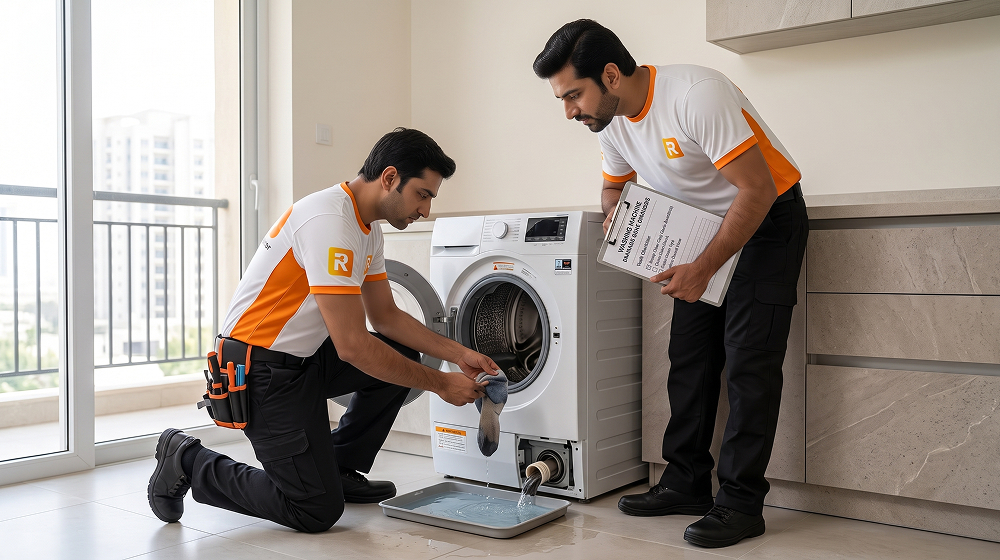
A washing machine not draining water usually shows up at the worst time: wet clothes, standing water, a locked door, or an error code before the spin cycle finishes. The problem often starts in the drainage system, not the whole machine. A blocked drain filter, kinked drain hose, weak drain pump, or faulty pressure switch can stop water from leaving the drum.
This guide helps you find the likely drainage fault and decide when DIY checks stop. The focus stays on the washing machine drainage system, not general appliance repair.
Why is your washing machine not draining?
Your washing machine is not draining because water cannot leave the drum through the drainage path. The drainage path runs from the tub outlet to the drain filter, drain pump, drain hose, standpipe, and household drain.
Common checks for a washing machine that does not drain include leveling the machine, checking the drain hose, cleaning the debris filter, and running a test cycle. That order supports a simple diagnostic sequence before parts are replaced.
Use the symptom pattern first. Standing water with pump noise often points to a blocked filter or restricted hose. Standing water with no pump noise points toward the pump motor, wiring, lid switch, door lock, or control board.
An OE error code means the washer cannot drain water used during the wash cycle.
What causes drainage failure?
Common causes of drainage failure include a blocked drain filter, a kinked drain hose, a clogged standpipe, a failed drain pump, the wrong drain height, or faulty water-level sensing. Each fault produces the same customer symptom: water remains in the drum.
How does a blocked drain filter stop draining?
A blocked drain filter stops draining by trapping coins, lint, buttons, hair, threads, tissues, and small clothing items before the pump inlet. The washer may still hum, but the water path becomes too narrow.
The debris filter requires cleaning every 30 to 40 loads, or every 2 to 3 months. Filter cleaning can improve cleaning performance and help prevent odors.
That interval gives a useful rule for Dubai homes. A household running 5 laundry loads per week reaches 40 loads in 8 weeks. A shared apartment running 10 loads per week reaches the same filter-cleaning point in about 4 weeks.
Common blocked-filter signs include:
- Wet clothes after spin
- Water at the bottom of the drum
- Slow draining before the final spin
- Clicking, humming, or rough pump sound
- Coins or fabric debris behind the filter cap
A filter blockage is a high-probability fault because it sits before the drain pump. It collects objects before those objects reach the impeller.
How does a clogged or kinked drain hose cause standing water?
A clogged or kinked drain hose causes standing water by restricting water after the pump. The pump may work correctly, yet water still returns, slows, or stays inside the drum.
The drain hose must not be kinked, bent, or damaged. Drain-hose placement figures include inserting the hose 6 to 8 inches into the standpipe or sink, avoiding an airtight connection, and keeping the drain height within the stated limits.
A top-load washer pump moves water at about 15 gallons per minute. A front-load washer pump moves water at about 10 gallons per minute. Each extra foot of drain pipe height reduces flow by about 1 gallon per minute.
That number explains slow draining in real apartments. A front-load washer draining at 10 gallons per minute can drop to about 7 gallons per minute when the outlet sits 3 feet higher than the ideal path. Height, hose bends, and lint buildup stack together.
How does a faulty drain pump prevent draining?
A faulty drain pump prevents draining because the washer cannot push water out of the tub. A clean filter and a straight hose do not solve a failed pump motor, a jammed impeller, a damaged pump housing, or a loose connector.
During a spin-only cycle, a humming sound during the first 15 seconds suggests that the pump starts. No humming sound suggests that the drain pump may not operate correctly.
Pump faults usually appear after 3 checks fail:
- The filter is clean.
- The hose is straight.
- The standpipe accepts water.
At that point, the washer is no longer dealing with a simple blockage. The fault has moved into pump operation or electrical control.
How does a failed pressure switch affect draining?
A failed pressure switch affects draining by sending the wrong water-level signal to the control board. The washer may read the drum as empty while water still sits inside.
Treat the pressure switch as a later diagnosis. Filter clogs, hose kinks, and pump faults occur closer to the water path. A pressure switch fault usually produces mixed behavior, such as overfilling, stopping mid-cycle, refusing to spin, or showing repeated water-level errors.
A technician checks this area with water-level signals, air tubing, wiring, and board response. Guessing at this stage wastes parts and time.
How do you fix drainage failure yourself?
Fix drainage failure yourself by using a safe sequence: stop the cycle, unplug the washer, drain trapped water, clean the filter, inspect the hose, test the pump sound, and run a short drain or spin cycle.
Unplug the washing machine before cleaning the debris filter. Do not disassemble the debris filter while the machine runs because hot water may flow out.
Use this coin and lint filter clean-out process:
- Turn off the washer.
- Unplug the power cord.
- Place towels and a shallow tray near the front access panel.
- Open the filter access door with a coin or flat screwdriver if the model uses a notch.
- Pull out the emergency drain tube, if fitted.
- Drain water into a bowl.
- Turn the filter counterclockwise.
- Remove lint, coins, buttons, threads, and hair.
- Rinse the filter under running water.
- Wipe the filter recess.
- Check that the small pump impeller moves freely.
- Refit the filter tightly.
- Run a short spin or drain cycle.
- Check the lower panel for leaks.
Open the access door with a coin or flat screwdriver, place a shallow pan and towels, turn the pump filter counterclockwise, and expect about 1 cup of water when the filter comes out.
The table below gives a quick diagnostic map for the washing machine drainage system.
| Part to inspect | Useful figure | What the figure means |
|---|---|---|
| Drain filter | 30 to 40 loads | Samsung filter-cleaning interval |
| Drain hose depth | 6 to 8 inches | Samsung standpipe insertion guide |
| Front-load pump flow | 10 gallons per minute | GE pump-flow reference |
| Top-load pump flow | 15 gallons per minute | GE pump-flow reference |
| Extra drain height loss | 1 gallon per minute per foot | GE flow-reduction reference |
| VAT on repair invoice | 5% | UAE standard VAT rate |
This table keeps the fix sequence practical. Start where water flow gets blocked most often. Stop when the fault requires testing live electrical parts.
Which of these faults needs a professional?
A professional is needed when water remains after filter cleaning, hose inspection, and a pump-sound test. That result points toward the pump, pressure switch, wiring, standpipe, or control system.
Book a washing machine technician when these 7 warning signs appear:
- Water stays in the drum after 2 drain attempts.
- The pump does not hum during a spin-only cycle.
- The washer trips the breaker.
- The lower filter panel leaks after correct tightening.
- The door stays locked with water inside.
- The same drain error returns within 1 or 2 cycles.
- The washer drains only when the hose is lowered into a bucket.
A plumber is more suitable when water backs up from the standpipe. Siphoning and drain setup problems can stem from improper drain hose placement and drain pipe conditions.
Do not bypass a lid lock, door lock, or wiring connector. Those parts control safety during filling, spinning, draining, and door release. A technician can test pump voltage, pressure switch response, harness continuity, and control-board output.
How much does it cost to fix drainage failure in Dubai?
Washing machine drainage repair in Dubai commonly starts from AED 49 to AED 149 for inspection or basic service listings, then rises when pump parts, labor, or model-specific components enter the job. Some appliance repair guides list inspection and diagnosis from AED 49, drainage repair from AED 99, and pump repair from AED 99.
Some also list diagnosis and inspection at AED 100 to AED 150, pump repair or replacement at AED 200 to AED 400, motor repair or replacement at AED 300 to AED 600, and door lock replacement at AED 150 to AED 300.
A few appliance repair guides also list wider UAE washing machine repair costs ranging from AED 100 to AED 600, with technician labor typically at AED 100 to AED 150 per hour.
The UAE Ministry of Finance states that VAT applies in the UAE at a standard rate of 5%. So, a taxable AED 400 pump repair becomes AED 420 after 5% VAT, if the provider charges VAT.
The table below summarizes Dubai cost signals for drainage-related washing machine repair.
| Repair item in Dubai | Published AED range | Best-fit drainage scenario |
|---|---|---|
| Inspection and diagnosis | 49 to 150 | First visit and fault check |
| Drainage repair listing | From 99 | Simple drain blockage |
| Pump repair listing | From 99 | Basic pump service listing |
| Pump repair or replacement | 200 to 400 | Pump fault after filter and hose checks |
| Wider washer repair | 100 to 600 | Mixed mechanical and electrical repairs |
| Technician labor | 100 to 150 per hour | Time-based repair work |
| VAT | 5% | Taxable service invoice |
A fair Dubai quote separates inspection, labor, spare parts, and VAT. Ask for a written fault note when the repair involves a pump, pressure switch, or control board.
Related washing machine problems
A washing machine not draining often connects to 5 related symptoms:
- Not spinning
- Leaking from the bottom
- Locked door
- Bad smell
- Drain error codes
The same drainage system can create all 5 symptoms. A washing machine not spinning may be reacting to water left inside the drum. A washing machine leaking from the bottom may have a loose filter cap, cracked drain hose, or pump-housing leak.
A locked front-load washer door often means the machine still detects water in the drum. That lock protects the room from a sudden water release.
Bad smell also sits close to drainage failure. Debris-filter cleaning with odor prevention makes filter care both a drainage and a hygiene task.
The working rule is simple:
- Filter first
- Hose second
- Pump third
- Pressure switch last
This order uses the drainage path itself as the diagnostic map. It prevents random part replacement and gives your repair technician better evidence when the washer still does not drain.
Final takeaway: Drain smarter before you repair bigger
A washing machine not draining water becomes easier to handle when you follow the drainage path, not random guesses. Start with the drain filter because coins, lint, threads, and small items often block water before it reaches the pump. Then check the drain hose, standpipe, pump sound, and pressure switch symptoms. This order keeps the repair simple when the fault is minor and gives your technician clearer evidence when the problem sits deeper. In Dubai, where repair costs can rise once parts and labor enter the quote, a clean diagnosis saves time and avoids unnecessary replacement. The rule is practical: remove visible blockage first, stop at electrical testing, and call a technician when water stays after the safe checks.
FAQs
Your washing machine may have a partly blocked drain filter, a restricted hose, or a drain height issue that reduces pump flow.
Yes, one coin can block the pump filter or jam the impeller, especially in front-load washing machines.
Standing water is a warning sign because it can cause locked doors, leaks, odor, pump strain, and poor spin performance.
Your washer may have a weak pump, blocked hose, wrong drain height, or standpipe restriction.
Repair is usually sensible when the fault is a filter, hose, pump, or switch issue and the washer is otherwise working well.
Ahmed Al Mansoori
Ahmed Al Mansoori is a UAE-based home appliance repair specialist with over 12 years of hands-on experience in diagnosing and repairing washing machines, refrigerators, dishwashers, ovens, dryers, and other household appliances across Dubai and Abu Dhabi. He has worked with leading appliance brands and is known for delivering reliable repair solutions, preventive maintenance guidance, and same-day technical support for residential clients. Ahmed specializes in troubleshooting modern smart appliances and energy-efficient systems commonly used in UAE homes.
