
Ultimate Guide to Home Appliance Repair: Services, Costs & Expert Tips
 May 8, 2026
13 min read
May 8, 2026
13 min read
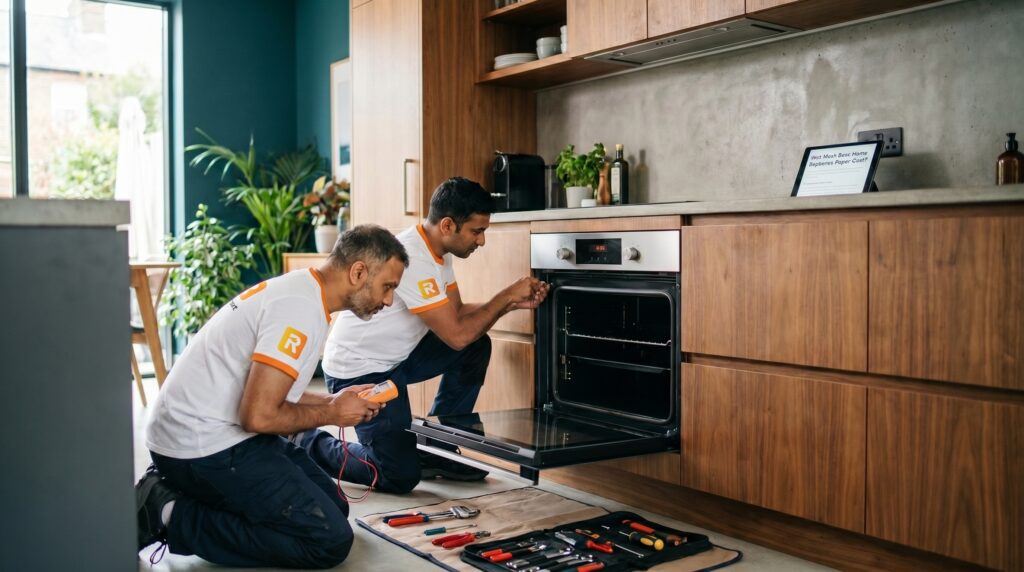
Home appliance repair is the diagnosis, part replacement, and restoration of malfunctioning refrigerators, washing machines, dryers, dishwashers, ovens, and HVAC units to manufacturer-specified operating condition. The U.S. Bureau of Labor Statistics (2023) records average annual household spending on appliance repair at $686. Delayed repairs push that figure higher.
Nine areas are covered here: appliance types, fault causes, costs by appliance, repair-versus-replacement thresholds, technician credentials, repair timelines, warranty terms, DIY fault limits, and the 6 maintenance tasks that cut breakdown frequency by 34%.
What Is Home Appliance Repair?
Home appliance repair is the technical process of identifying faults, sourcing replacement components, and restoring a household appliance to its manufacturer-specified operating condition. Three repair categories exist: mechanical (motor, belt, drum), electrical (wiring, control board, thermostat), and refrigerant (compressor, condenser coil, evaporator).
Repair and maintenance are distinct. Repair corrects an existing fault. Maintenance — filter cleaning, seal inspection, calibration — stops faults from developing.
What Home Appliances Require Repair Most Frequently?
The 6 home appliances with the highest U.S. repair rates are washing machines (18%), refrigerators (16%), dishwashers (14%), dryers (12%), ovens and ranges (10%), and HVAC units (9%). The Consumer Reports 2023 Appliance Reliability Survey pulled data from 56,000 households across all four U.S. census regions to produce these figures.
Fault breakdown by appliance:
- Washing machines: 18% five-year repair rate; pump seizure, drum bearing wear, and control board failure cover 74% of faults
- Refrigerators: 16% five-year repair rate; compressor failure and ice-maker motor burnout lead
- Dishwashers: 14% five-year repair rate; pump motor and spray arm blockage are the dominant fault pair
- Dryers: 12% five-year repair rate; heating element failure and blown thermal fuse cover most calls
- Ovens and ranges: 10% five-year repair rate; igniter failure in gas models and bake element burnout in electric models top the list
- HVAC units: 9% annual service call rate; capacitor failure and low refrigerant charge are the two most common diagnoses
What Are the Most Common Home Appliance Problems?
The 8 most common home appliance problems are failure to power on, abnormal noise, water leakage, loss of heating or cooling function, error code display, door seal deterioration, control board failure, and motor failure. Power failure and heating element failure together account for 43% of all residential service calls, per the HomeAdvisor 2023 Appliance Repair Report.
What Causes a Home Appliance to Fail to Power On?
A home appliance loses power from 4 faults: a blown thermal fuse, a failed control board, a tripped circuit breaker, or a damaged power cord. Thermal fuse failure leads the group — 31% of dryer power failures and 22% of washing machine power failures trace back to it, per the Association of Home Appliance Manufacturers (AHAM, 2022).
Test power cord continuity with a multimeter set to resistance mode before disassembling the appliance for internal inspection.
What Causes Abnormal Noise in a Home Appliance?
Abnormal appliance noise indicates 5 mechanical faults: worn drum bearings, a damaged drive belt, a loose motor mount, foreign objects trapped inside the drum, or a failing water pump. Grinding noise identifies bearing wear. Thumping noise points to belt damage or an unbalanced drum load.
What Causes Water Leakage in a Washing Machine or Dishwasher?
Water leakage in washing machines and dishwashers originates from 3 failure points: a deteriorated door gasket, a cracked inlet hose, or a failed pump seal. Washing machine hose failure alone causes 22% of annual household water damage claims, according to the Institute of Inspection, Cleaning and Restoration Certification (IICRC).
EPDM rubber gaskets degrade under repeated 30°C–60°C wash cycles. Replace gaskets on a 5–7 year cycle — visible cracking is a late signal, not an early one.
How Much Does Home Appliance Repair Cost?
Home appliance repair costs $100–$600 nationally, with a median service call at $175 before parts, per HomeAdvisor’s 2024 True Cost Guide. Labor takes 40%–60% of every bill. Diagnostic fees average $75–$150 per visit; most technicians apply that fee toward the repair total.
The table below maps average repair costs, common fault types, and part cost ranges by appliance.
| Appliance | Average Repair Cost | Common Fault | Part Cost Range |
| Refrigerator | $200–$400 | Compressor, ice maker | $50–$300 |
| Washing Machine | $150–$350 | Pump, control board | $40–$200 |
| Dryer | $100–$250 | Heating element, thermal fuse | $15–$80 |
| Dishwasher | $150–$300 | Pump motor, spray arm | $20–$150 |
| Oven / Range | $100–$300 | Igniter, bake element | $20–$100 |
| HVAC Unit | $150–$600 | Capacitor, refrigerant | $30–$400 |
Source: HomeAdvisor True Cost Guide, 2024
What Is the Average Cost to Repair a Refrigerator?
Refrigerator compressor replacement costs $250–$400 in labor plus $50–$300 in parts, based on technician rates of $50–$100 per hour. The all-in compressor job tops out near $550. Thermostat replacement sits at the opposite end: $100–$150 with parts included.
What Is the Average Cost to Repair a Washing Machine?
Washing machine repair runs $150–$350 on average. Control board replacement reaches $200–$350. Lid switch replacement sits at $80–$150. Drum bearing replacement — $175–$300 — adds 1–2 extra labor hours in front-load models versus top-load, because front-loaders require full cabinet disassembly to access the drum shaft.
What Is the Average Cost to Repair a Dryer?
Dryer repairs average $100–$250, with heating element replacement at $150–$250 and thermal fuse replacement at $75–$150 including labor. Electric dryers cost 15% less to repair than gas models. Gas dryers carry additional costs from gas valve components and burner assembly access.
What Is the Average Cost to Repair a Dishwasher?
Dishwasher pump motor replacement costs $150–$350. Spray arm replacement runs $50–$100, placing the average dishwasher repair at $150–$300. Control panel failure is the outlier: $200–$400, driven by brand-specific board pricing from manufacturers like Bosch and KitchenAid.
What Is the Average Cost to Repair an Oven or Range?
Gas oven igniter replacement averages $150–$300. Electric oven bake element replacement runs $75–$200. Control board failure — the costliest oven repair — averages $200–$400 across both gas and electric configurations.
Repair vs. Replace: When Is Home Appliance Repair Worth It?
Home appliance repair is worth the cost when the repair bill stays below 50% of the appliance’s current replacement value — the threshold Consumer Reports and AHAM call the 50% Rule. Age compounds the decision: repair appliances under 50% of their rated lifespan; replace at 75% and beyond.
The table below maps each appliance’s rated lifespan to its repair and replacement age cutoffs.
| Appliance | Average Lifespan | Repair Threshold | Replace Threshold |
| Refrigerator | 13–17 years | Under 8 years | Over 13 years |
| Washing Machine | 10–14 years | Under 7 years | Over 11 years |
| Dryer | 10–13 years | Under 6 years | Over 10 years |
| Dishwasher | 9–12 years | Under 6 years | Over 9 years |
| Oven / Range | 13–15 years | Under 8 years | Over 12 years |
| HVAC Unit | 15–20 years | Under 10 years | Over 15 years |
Source: AHAM Appliance Industry Statistics, 2023
Replace the appliance, if energy consumption has climbed more than 25% above its original baseline. That gap adds $80–$200 per year to utility costs, per the U.S. Department of Energy (2023). A rising utility bill is a degradation signal — not a billing anomaly.
How to Find a Qualified Home Appliance Repair Technician?
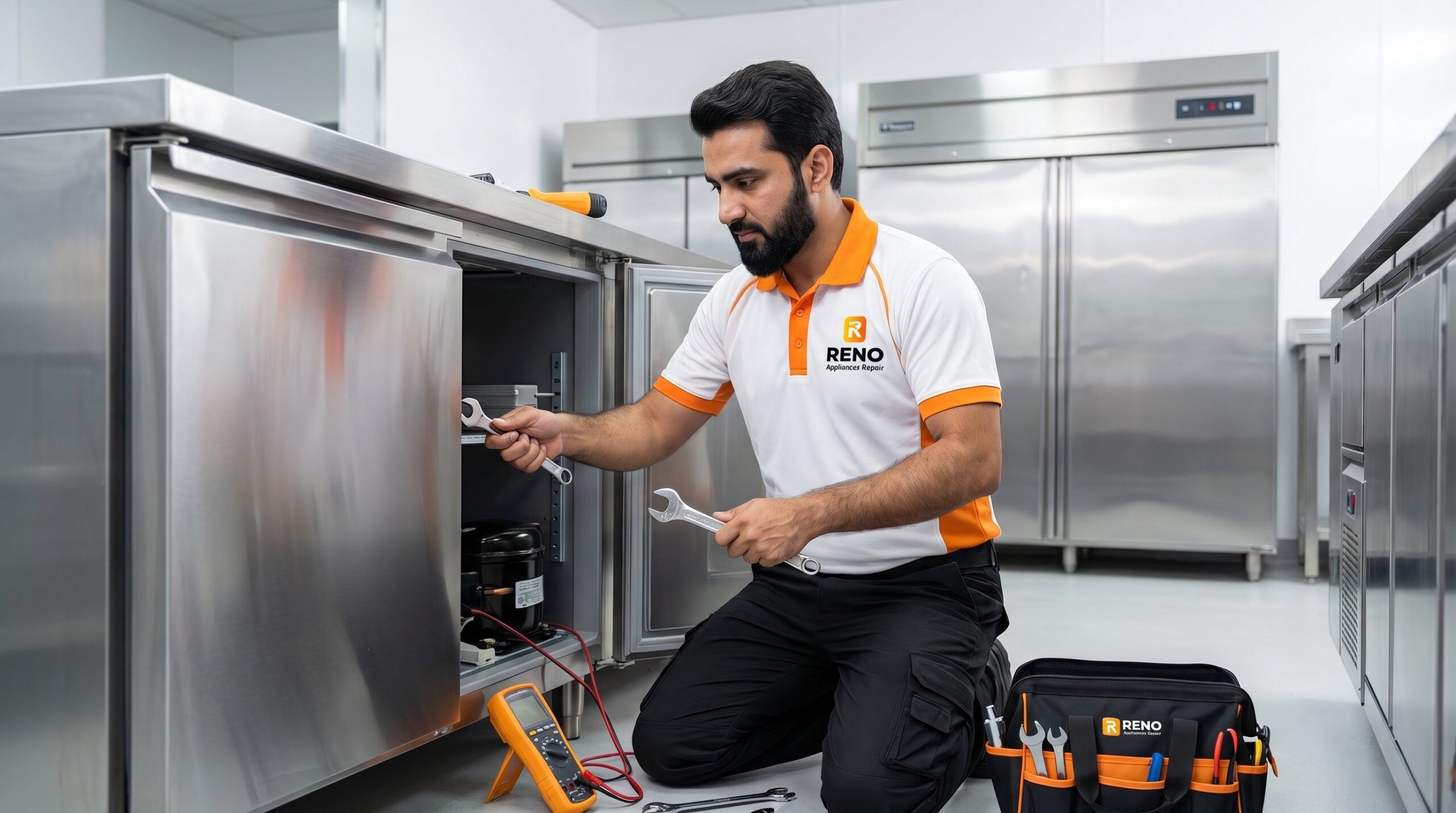
Find a qualified home appliance repair technician through 3 verified channels: manufacturer-authorized service networks, state-licensed contractor databases, and screened platforms such as Angi, Thumbtack, or HomeAdvisor. Manufacturer-authorized technicians use OEM parts and preserve active warranty coverage. Independent technicians do not always meet that standard.
Four credentials require verification before repair authorization:
- State contractor license — 38 U.S. states legally require licensing for appliance repair operations
- EPA Section 608 Certification — federal law mandates this for any technician who handles refrigerants in HVAC systems, refrigerators, or freezers
- General liability insurance — minimum $1 million per occurrence
- Manufacturer authorization — brand-specific certification from Whirlpool, Samsung, LG, GE Appliances, or Bosch service networks
Collect 3 written estimates before committing. Labor rates vary 20%–40% within the same metro area, per HomeAdvisor’s 2024 survey of 12,000 active service providers.
What Certifications Does a Home Appliance Repair Technician Need?
A home appliance repair technician requires 3 primary credentials: EPA Section 608 Certification, a state contractor license, and manufacturer authorization from relevant appliance brands. The National Appliance Service Technician Certification (NASTeC), issued by the Professional Service Association (PSA), is the recognized voluntary national certification across the trade.
The NASTeC exam covers 7 technical domains:
- Refrigeration systems: compressor, condenser, evaporator function and diagnosis
- Electrical systems: wiring schematics, control board logic, sensor calibration
- Mechanical systems: motors, belts, pump assemblies, bearing tolerance
- Gas systems: burner combustion, igniter resistance, gas valve operation
- Safety procedures and OSHA compliance standards
- Appliance diagnostics and manufacturer error code interpretation
- Service documentation and customer communication standards
How Long Does Home Appliance Repair Take?
Standard home appliance repairs — heating element replacement, door seal swap, inlet valve replacement — take 1–3 hours. Complex repairs — compressor replacement, control board failure, refrigerant recharge — take 3–6 hours. Parts availability is the larger variable. In-stock components allow same-day completion. Back-ordered parts push timelines to 3–14 business days.
Repair duration by fault type:
| Repair Type | Standard Time | Complex Time |
| Dryer heating element | 1–2 hours | — |
| Washing machine pump | 1.5–2.5 hours | — |
| Refrigerator compressor | — | 4–6 hours |
| Dishwasher control board | 2–3 hours | — |
| HVAC capacitor | 1–1.5 hours | — |
| HVAC refrigerant recharge | — | 3–5 hours |
Book the repair within 48 hours of fault identification. A blocked pump left running burns out its motor. A refrigerant leak left unaddressed seizes the compressor. Both convert a $150 part replacement into a $500 full-assembly job.
Does Home Appliance Repair Come With a Warranty?
Home appliance repair carries 2 warranty types: a labor warranty of 30–90 days covering the technician’s work, and a parts warranty of 90 days to 1 year on replacement components. Manufacturer-authorized service centers hold a 90-day minimum labor warranty and honor the original appliance warranty on repaired components, per AHAM service standards.
Independent technicians average 30–60 days on labor. OEM parts carry 1-year manufacturer warranties. Third-party aftermarket parts carry 90 days to 6 months, depending on the supplier.
Retain 4 documents after every completed repair:
- Itemized invoice — lists each part number and labor charge separately; required for warranty claims
- Technician license number — used for state contractor board dispute resolution
- Part manufacturer and part number — establishes OEM versus aftermarket warranty eligibility
- Service date and fault description — creates repair history for future diagnostic reference
What Are the DIY Home Appliance Repair Steps for Common Faults?
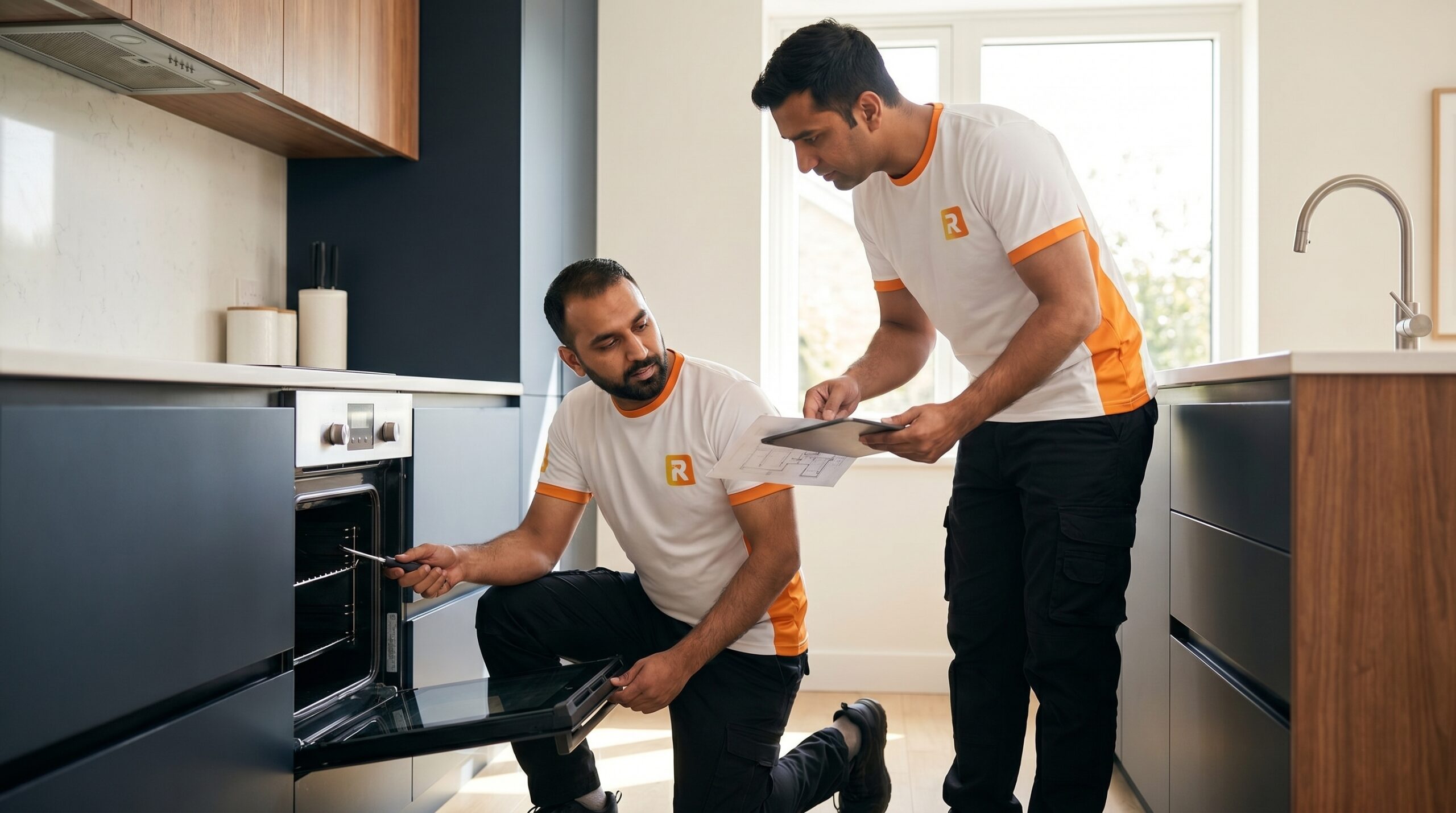
DIY home appliance repair is safe for 5 fault types: dryer vent cleaning, refrigerator door gasket replacement, washing machine filter cleaning, dishwasher spray arm clearing, and electric oven igniter replacement. The U.S. Consumer Product Safety Commission (CPSC) links improper DIY repair to 11% of residential appliance fires each year. Fault-type selection — not mechanical skill — determines risk.
How to Clean a Clogged Dryer Vent?
To clean a clogged dryer vent, complete these 5 steps:
- Disconnect the dryer from the wall outlet
- Loosen the exhaust clamp and detach the vent duct from the rear port
- Feed a flexible vent cleaning brush — minimum 12 feet — into the duct from the exterior wall cap
- Rotate the brush clockwise to break up and extract lint accumulation
- Reattach the duct and run a 10-minute air-dry cycle to expel remaining debris
Lint buildup extends drying time by 25% and drives exhaust temperatures past 130°F — the CPSC ignition threshold for dryer duct fires. Clean annually.
How to Replace a Refrigerator Door Gasket?
To replace a refrigerator door gasket, complete these 4 steps:
- Pull the model number from the interior door jamb label and order the matching OEM gasket
- Soak the new gasket in 50°C–60°C water for 10 minutes to restore flexibility
- Pull back the door liner, loosen the retaining screws, and remove the old gasket from its channel
- Press the new gasket’s mounting lip into the retaining channel starting at both top corners, working downward
Test the seal with a paper strip: insert it between the door and frame, then pull. Consistent resistance across all four sides confirms a correct seal.
How to Clean a Dishwasher Spray Arm?
To clear a clogged dishwasher spray arm, complete these 3 steps:
- Unscrew the center retaining nut counterclockwise — standard on Bosch, Whirlpool, GE, and LG models — and lift out the arm
- Clear each spray hole with a thin wire or wooden toothpick to dislodge mineral scale
- Soak the arm in a 1:1 white vinegar and water solution for 20 minutes, then rinse under running water
In households with water hardness above 7 grains per gallon, mineral scale cuts spray arm pressure by up to 40%. Clean every 6 months.
How to Prevent Home Appliance Breakdowns?
6 maintenance tasks cut home appliance breakdown frequency by 34%: dryer vent cleaning every 12 months, washing machine filter cleaning every 60 days, refrigerator condenser coil vacuuming every 12 months, dishwasher drain filter cleaning every 30 days, HVAC filter replacement every 90 days, and oven door seal inspection every 6 months. A 2022 study by the Appliance Standards Awareness Project (ASAP) measured that 34% reduction across households following manufacturer-defined maintenance schedules over a 10-year tracking period.
Task-by-task breakdown with measured outcomes:
- Dryer vent — every 12 months: restores 15%–20% lost drying efficiency and eliminates the primary dryer fire condition
- Washing machine drum and filter — every 60 days: prevents pump blockage, drum mold at the door seal, and detergent odor buildup
- Refrigerator condenser coils — every 12 months: reduces compressor operating load by 10%–15% and extends compressor service life
- Dishwasher drain filter — every 30 days: prevents pump motor strain and standing water at the base
- HVAC air filter — every 90 days (every 30 days with indoor pets): maintains rated airflow volume and prevents compressor overload from restricted intake
- Oven door seal — every 6 months: seals heat loss that adds 25% to cook time at set temperatures
Frequently Asked Questions About Home Appliance Repair
Is it worth repairing a 10-year-old washing machine?
Repairing a 10-year-old washing machine is worth the cost only when the repair bill stays below $175 — 50% of the $350 average replacement cost for a comparable model. A 10-year-old machine sits at 71%–100% of its 10–14 year rated lifespan. Repairs above $175 at that age return lower long-term value than a direct replacement in most fault scenarios.
How long does a refrigerator compressor last?
A refrigerator compressor lasts 10–15 years at standard operating conditions: 35°F–38°F internal temperature and 60°F–95°F ambient room temperature. Oak Ridge National Laboratory’s Building Technologies Research Division (2021) found compressors running above 95°F ambient degrade 20%–30% faster than the rated service life.
What voids a home appliance warranty?
4 actions void a manufacturer appliance warranty: repairs by non-authorized technicians, use of non-OEM parts, physical damage from misuse, and commercial operation of a residentially rated unit. Standard manufacturer coverage runs 1 year on parts and labor. Select components carry extended terms — Whirlpool’s 10-year wash system warranty and LG’s 10-year direct-drive motor warranty are the most documented examples.
Can a home appliance repair technician fix any brand?
A general appliance repair technician services all major brands, including Whirlpool, GE, Samsung, LG, Bosch, Maytag, KitchenAid, Frigidaire, and Electrolux. Manufacturer-authorized technicians complete 40–120 hours of annual factory training and hold authorization for one brand family — not the full appliance market.
How do I read an appliance error code?
Read an appliance error code by matching the display to the fault code chart in the owner’s manual or the manufacturer’s support site, using the model number from the appliance data plate. Codes use a letter-prefix and numeric-suffix structure: F5E1 in Whirlpool washers flags a door lock circuit fault; E3 in Samsung refrigerators identifies a defrost sensor failure. Each code maps to a specific component or circuit, not a general system.
Summary: Home Appliance Repair at a Glance
Home appliance repair covers 6 appliance categories — refrigerators, washing machines, dryers, dishwashers, ovens, and HVAC units — with repair costs of $100–$600 nationally. The 50% Rule separates repair from replacement decisions. Four technician credentials matter: state license, EPA Section 608 Certification, liability insurance, and manufacturer authorization. Six maintenance tasks reduce breakdown frequency by 34% over 10 years. DIY repair is safe for 5 low-risk fault types. Electrical faults, refrigerant systems, and control board failures require a certified home appliance repair technician.
Ahmed Al Mansoori
Ahmed Al Mansoori is a UAE-based home appliance repair specialist with over 12 years of hands-on experience in diagnosing and repairing washing machines, refrigerators, dishwashers, ovens, dryers, and other household appliances across Dubai and Abu Dhabi. He has worked with leading appliance brands and is known for delivering reliable repair solutions, preventive maintenance guidance, and same-day technical support for residential clients. Ahmed specializes in troubleshooting modern smart appliances and energy-efficient systems commonly used in UAE homes.
